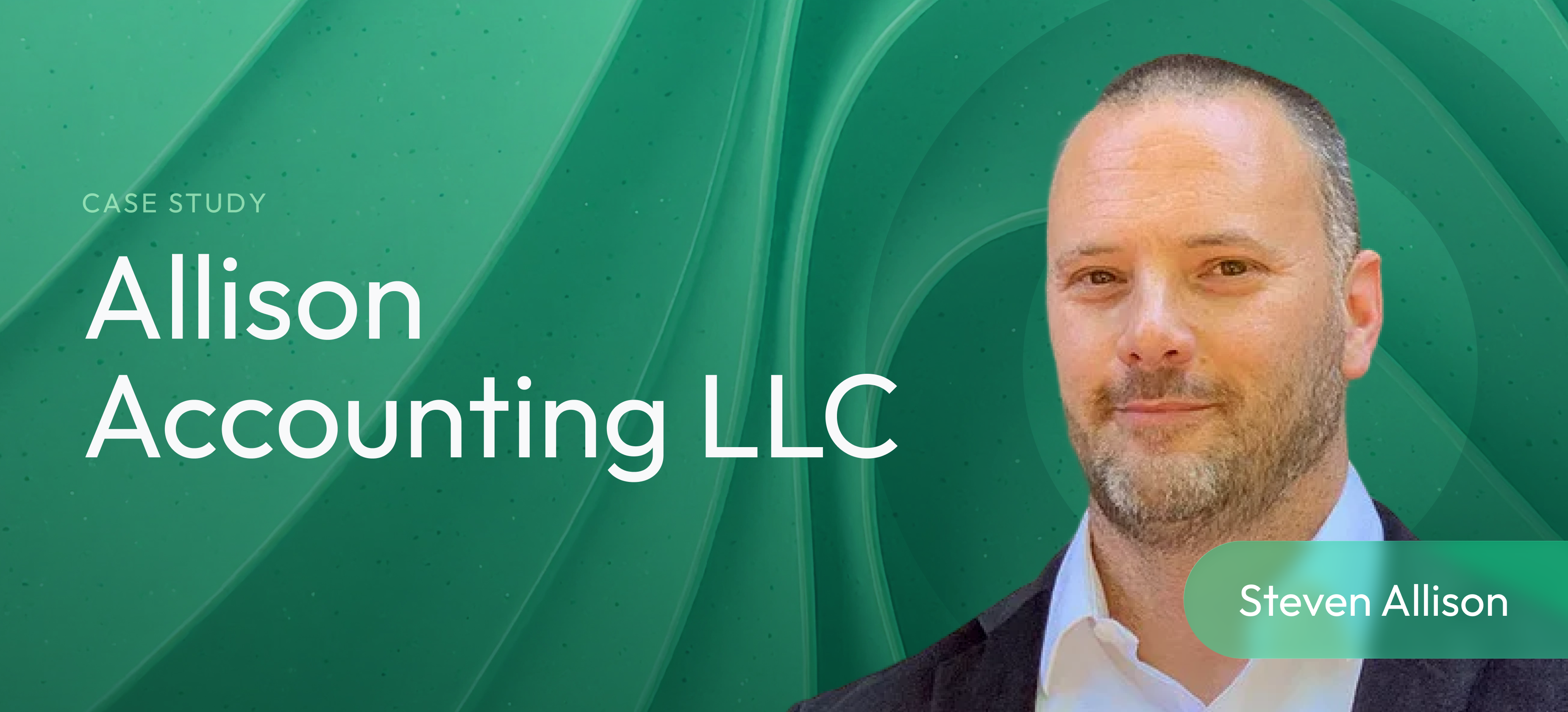
The stats
- 30%+ annual firm growth since 2020
- Over 40% growth in the most recent year
- From 4-6 hours to under 1 hour per advisory plan
Tech stack
- Juno
- TaxDome
- Drake
“There’s no way I would actually be doing this level of tax planning if it still took four to six hours every time. With a tool like Juno, I’ve got it to the point now where I can probably work up a tax plan in less than an hour easily. Before, that just wouldn’t have been possible.”
The situation: Making time for advisory as the firm grew 30%+ every year
Steven Allison’s firm was growing fast. That growth made one thing clear. Without strong processes, advisory would never keep up.
Manual tax planning took too long and did not scale. Insights were buried in delivery letters or handled informally during prep. Even when advisory helped clients, the value often went unrecognized because it was not explained clearly.
As Steven put it, “We've been growing 30% plus every year since 2020, which has been insane. You can't get there and you can't maintain that kind of growth if you don't have good processes in place to do it.”
Advisory mattered, but the way it was delivered did not fit the reality of a growing firm.
What they did: Built an advisory workflow that fit real firm life
Steven stopped treating advisory as something that happened during tax prep and rebuilt how it fit into the year.
- Tagged tax planning candidates during tax season
- Moved advisory into a defined post–tax season window
- Collected tax planning organizers through TaxDome
- Uploaded prior year returns into Juno
- Used Juno to identify strategies and model outcomes
- Automatically output advisory presentation deck
- Personally reviewed each plan before client delivery
The goal was not perfection. It was repeatability. As Steven said of the time savings, “Juno is the difference between me doing it and me not doing it at all.”
What changed: Advisory became something the firm could repeat
Once advisory had its own workflow, it stopped competing with deadlines.
Planning work that once felt unrealistic became manageable. Steven spent less time building calculations and more time reviewing decisions. “I found myself always with Juno on the other screen actually doing all the calculations for all the strategies,” he shared.
Clients responded differently when the value was clear. One moment stood out. “You're telling me I could have bought a house over the last ten years?”
That reaction came from clarity, not complexity.
Why it matters: Advisory only works if it survives growth
Steven’s experience highlights why advisory breaks down for so many firms. The problem is not knowledge. It is structure.
When advisory depends on long hours and manual effort, it disappears as soon as the firm gets busy. When it is built into a repeatable system, it becomes sustainable.
As Steven explained, “It looks like I spent hours and hours and hours on it, but in reality I haven’t. The system is doing the heavy lifting so I can focus on the client.”
Juno did not replace judgment. It removed the friction that kept that judgment from showing up consistently.